

Who has the right of way is determined by a fixed hierarchy. At the top is the police officer, followed by the traffic lights, then the traffic signs, and only if all these are absent does the basic rule apply: right of way from the right. A higher level always overrides a lower one.
The Right of Way Hierarchy
- Authorized persons (police): their commands and hand signals take precedence over all other rules and signs.
- Traffic lights: functioning lights take precedence over placed traffic signs.
- Traffic signs: signs such as the inverted triangle (B1, yield) or the stop sign (B5) determine the right of way if there are no functioning lights or officers.
- Basic rules: if all signaling is absent, the right of way from the right applies.
Crossing Opponents
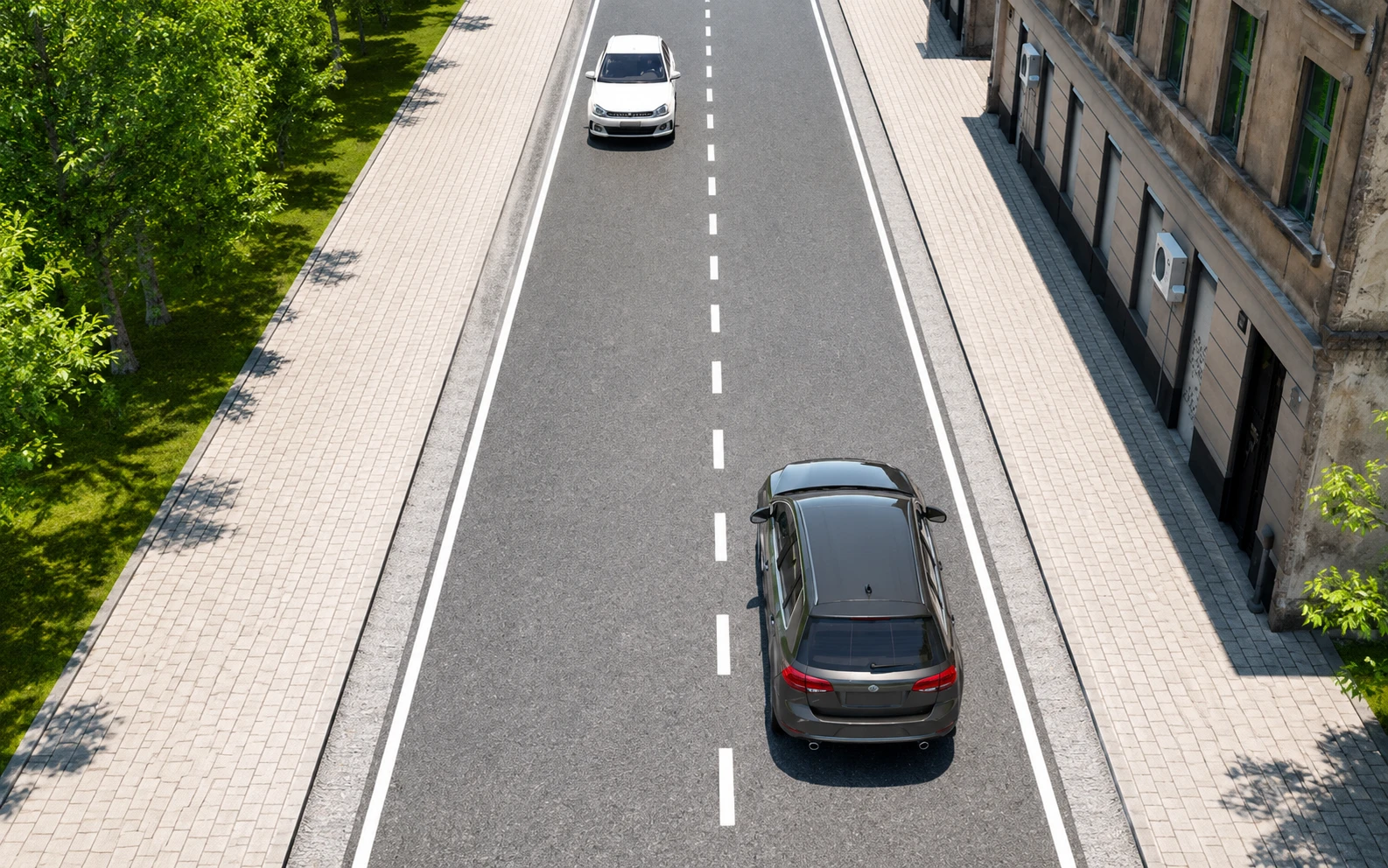
Crossing typically occurs on the right. If there is an obstacle on your side, you must wait and let the oncoming vehicle go first. If two oncoming vehicles both want to turn left into the same side street, they cross each other on the right (behind): they proceed one after the other and then turn. This keeps visibility clear and avoids a right of way conflict.
The Right of Way from the Right
The right of way from the right applies at any intersection without signaling, for all drivers, including cyclists. Important: a driver approaching from the right who briefly stops to assess the situation retains their right of way completely.
When Do You Lose Your Right of Way?
As soon as you perform a maneuver, you lose your right of way and must yield to other road users. This is the case when:
- changing lanes,
- leaving a parking space or driveway,
- reversing,
- making a U-turn,
- entering the public road from a dirt road or path.
Priority for Tram, Bus, and Priority Vehicles
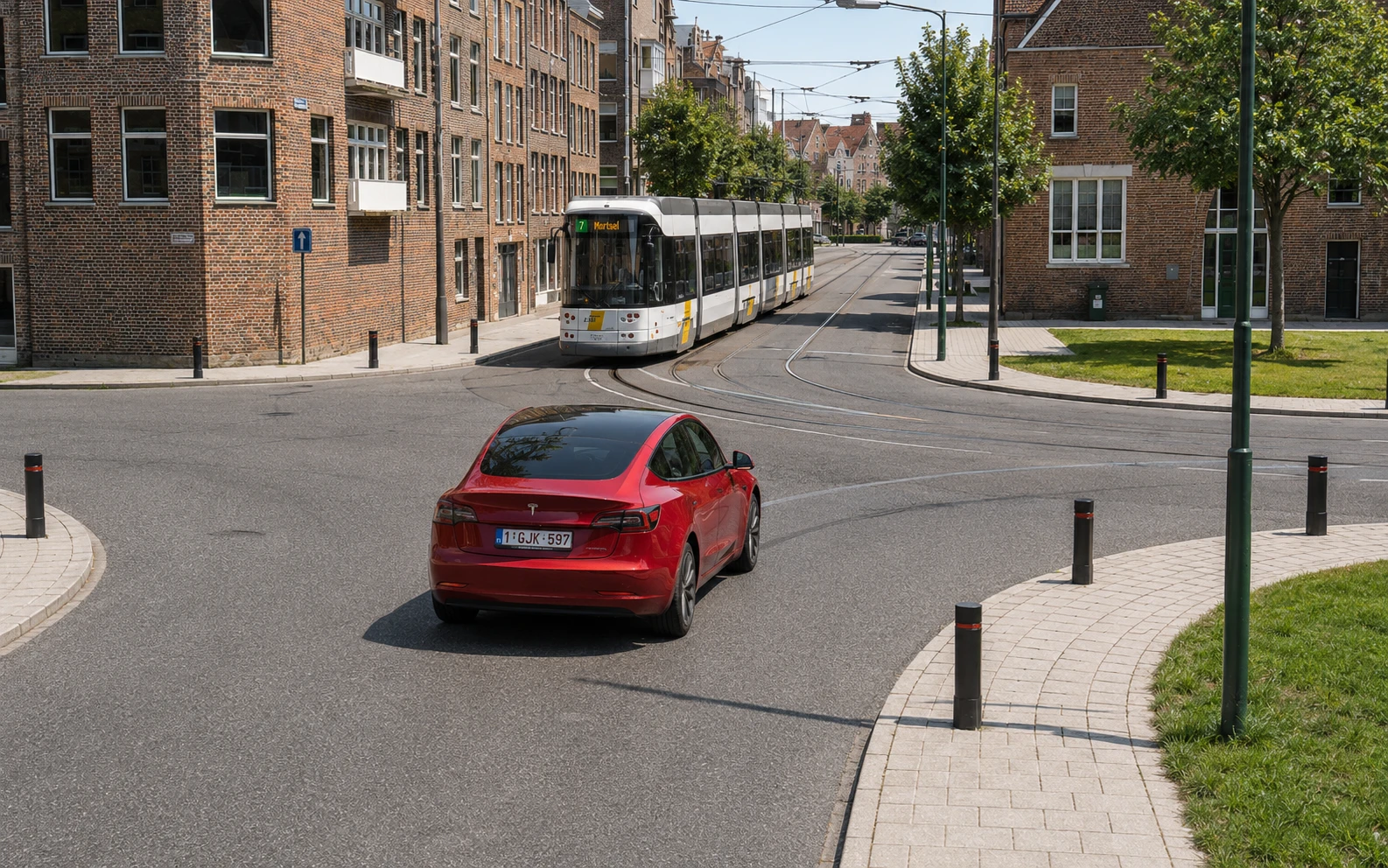
- The tram almost always has priority, whether it comes from the left or the right. It only yields to traffic lights and the commands of an officer.
- The bus has priority within the built-up area as soon as the driver activates the left turn signal to leave the stop. Outside the built-up area, this priority does not apply.
- Priority vehicles have priority when the blue flashing light is on é and the siren is simultaneously active.
Frequently Asked Questions
The driver coming from the right, except at a roundabout or if they come from a prohibited direction or a dirt road.
No. You retain your right of way from the right, even if you briefly stop to assess the situation.
Only when they use both the blue flashing light AND the siren together.
Master the right of way rules blindly
Right of way and crossing are the parts where most mistakes are made. Train with realistic traffic situations and video explanations until it becomes second nature.
Choose your packageFurther reading: Traffic signs · Overtaking in Belgium · All traffic rules
Last updated: June 2026 · Content verified by Mathieu, instructor · Source: the Belgian Highway Code