The material that generates the most traffic on your theory exam: traffic signs, right of way, speed, and alcohol. Clearly explained, with the Belgian rules per region. Understand it well once and you will immediately recognize the tricky questions.
The core topics of the Highway Code, each fully explained.
The Belgian signs in six categories, each with its own shape and color: danger, right of way, prohibition, obligation, parking, and indication.
Read moreThe fixed hierarchy of agents, lights, signs, and right of way from the right. Plus intersections and when you lose your right of way.
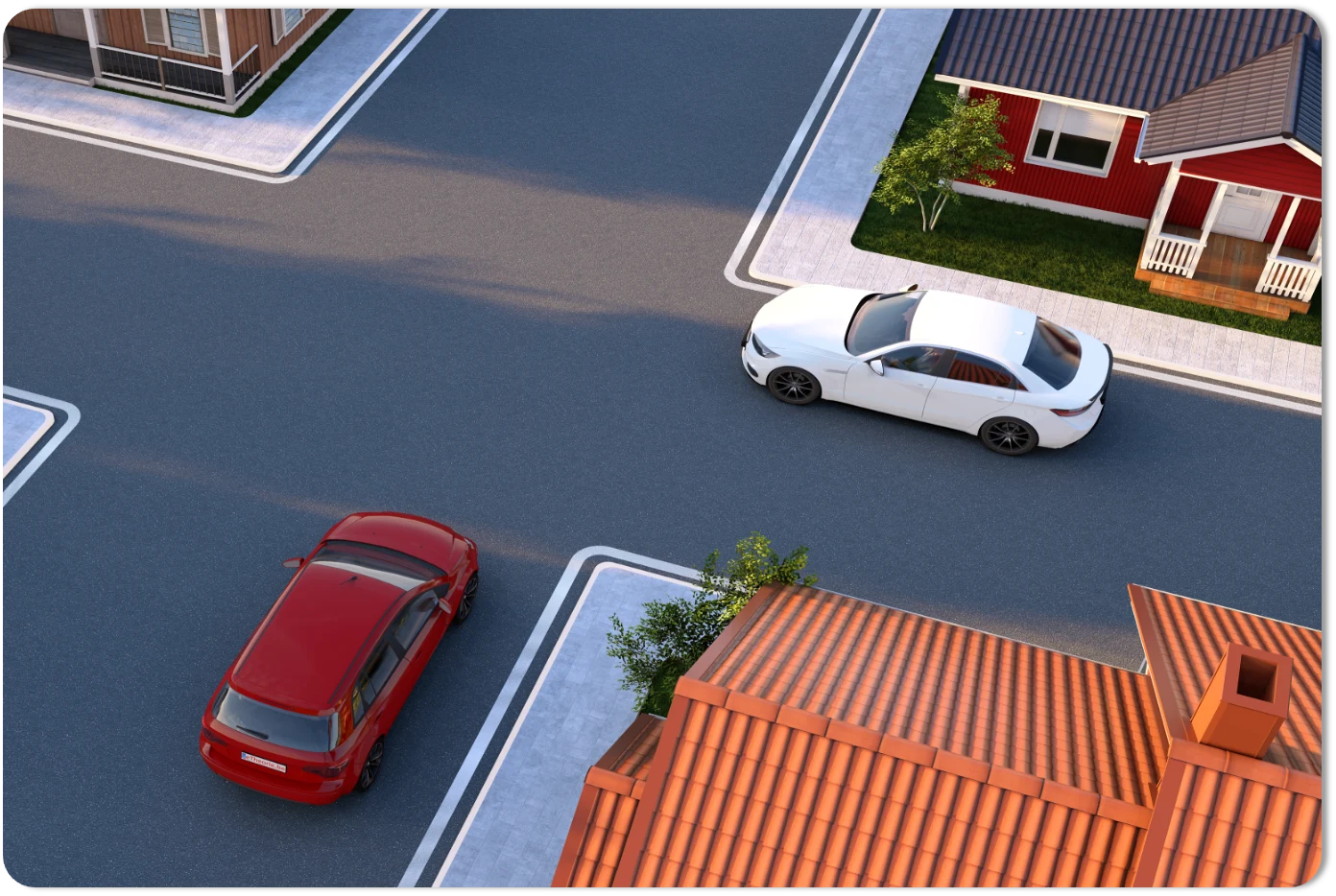
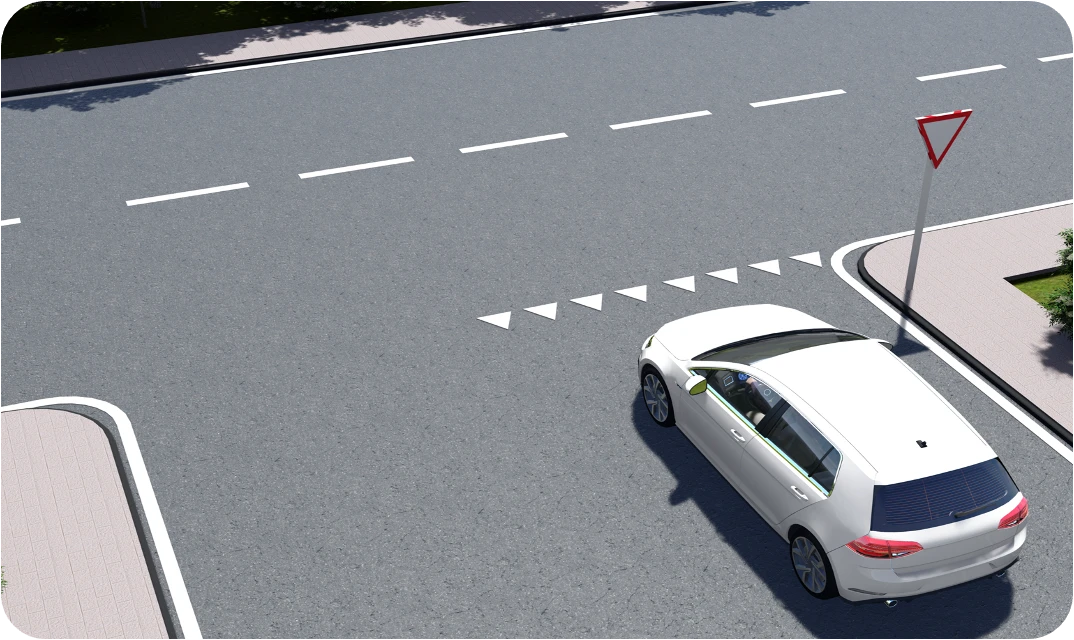
Read moreAt an intersection without signs, you give way to those coming from the right. The rule, the Belgian detail about stopping, and all exceptions.
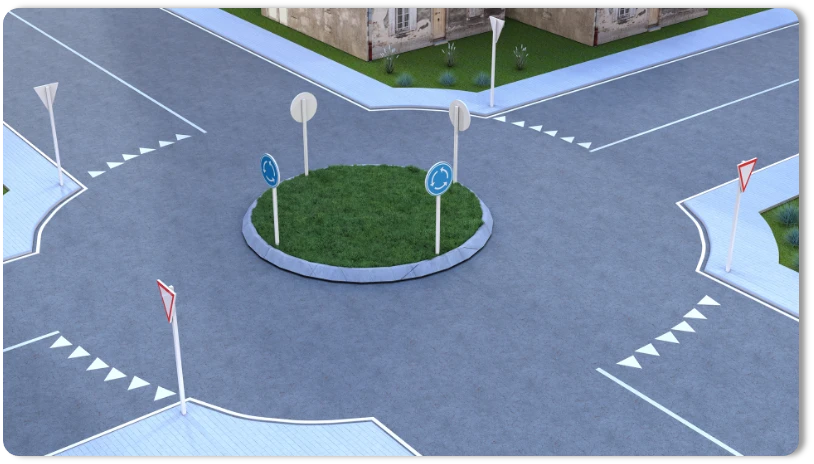
Read moreTraffic on the roundabout has the right of way. When entering, you do not signal, but you do when exiting. Plus lane choice.
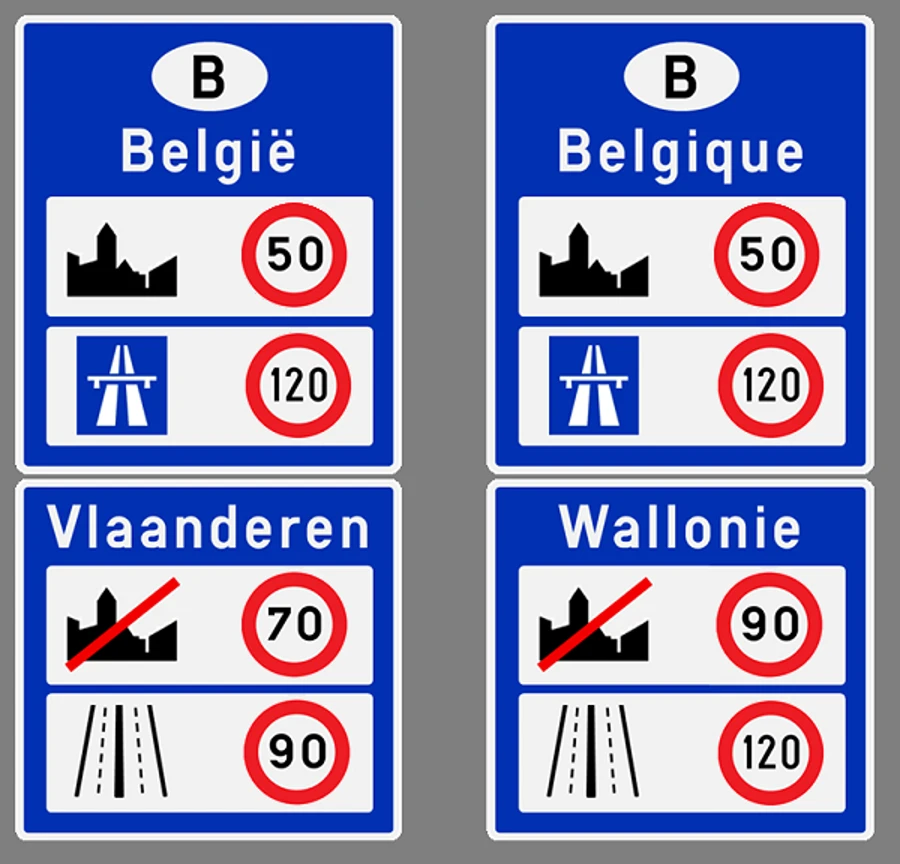
Read more30/50 in the built-up area, 70 or 90 outside, 120 on the motorway. By region and road type, with the exception that lifts the regional boundary.
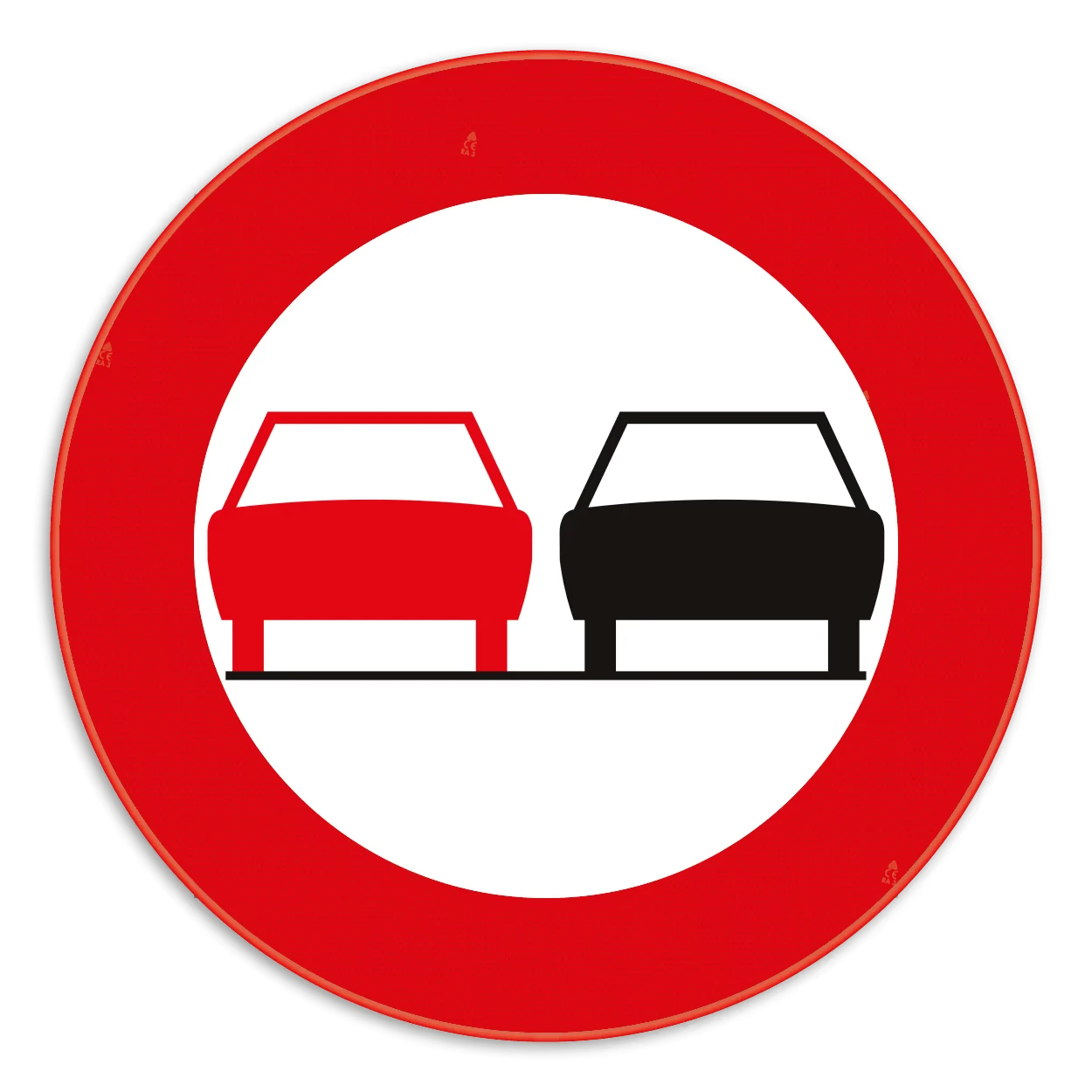
Read moreLeft is the rule, right is allowed only in two cases. Where overtaking is prohibited, what sign C35 means, and the distance to a cyclist.
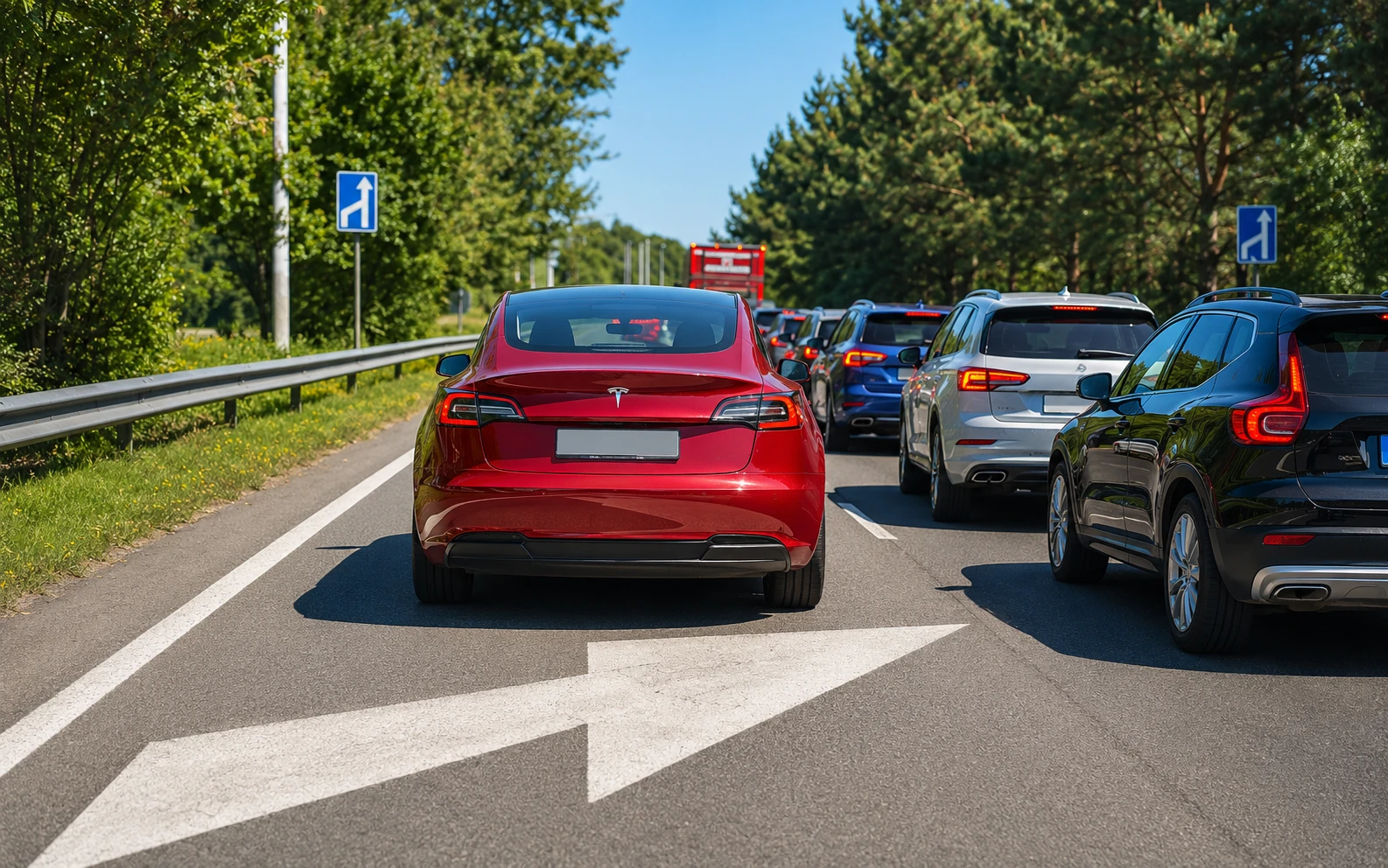
Read moreWhen is zip merging mandatory, how to merge correctly, and why you do not merge on a motorway entrance? The big trick question of the exam.
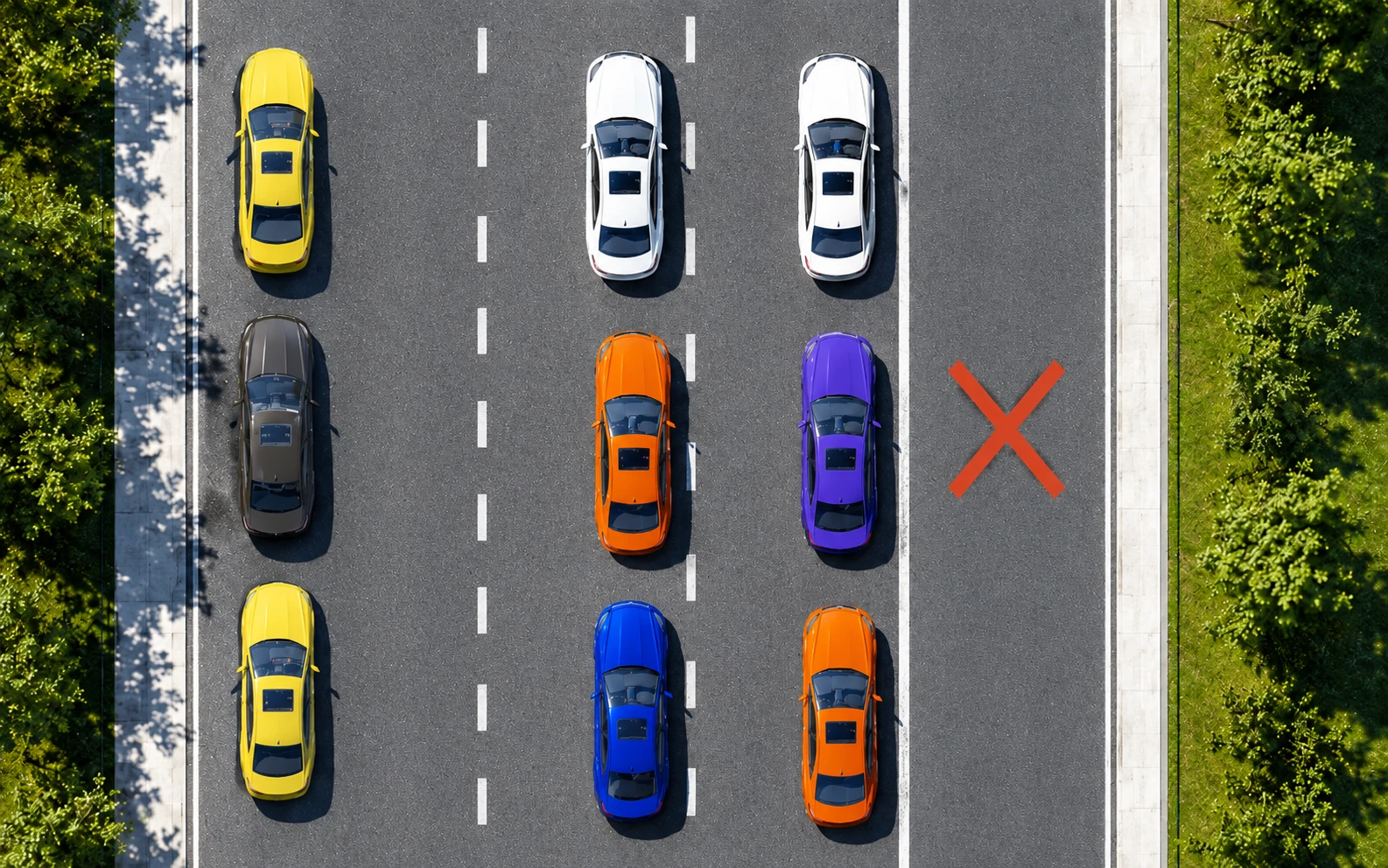
Read moreIn a traffic jam, you form an emergency lane for emergency services: left to left, the rest to the right. This is how to do it correctly.
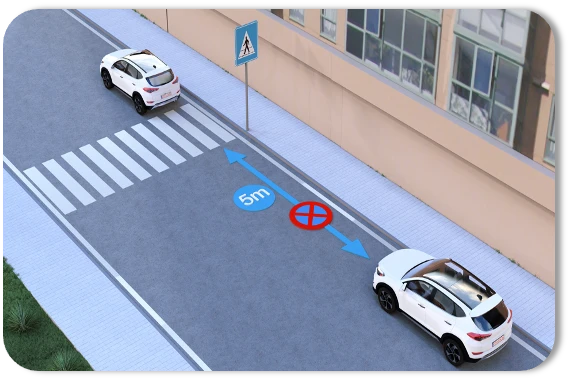
Read moreThe difference between stopping and parking, the 5- and 20-meter rule, and the meaning of signs E1 and E3.
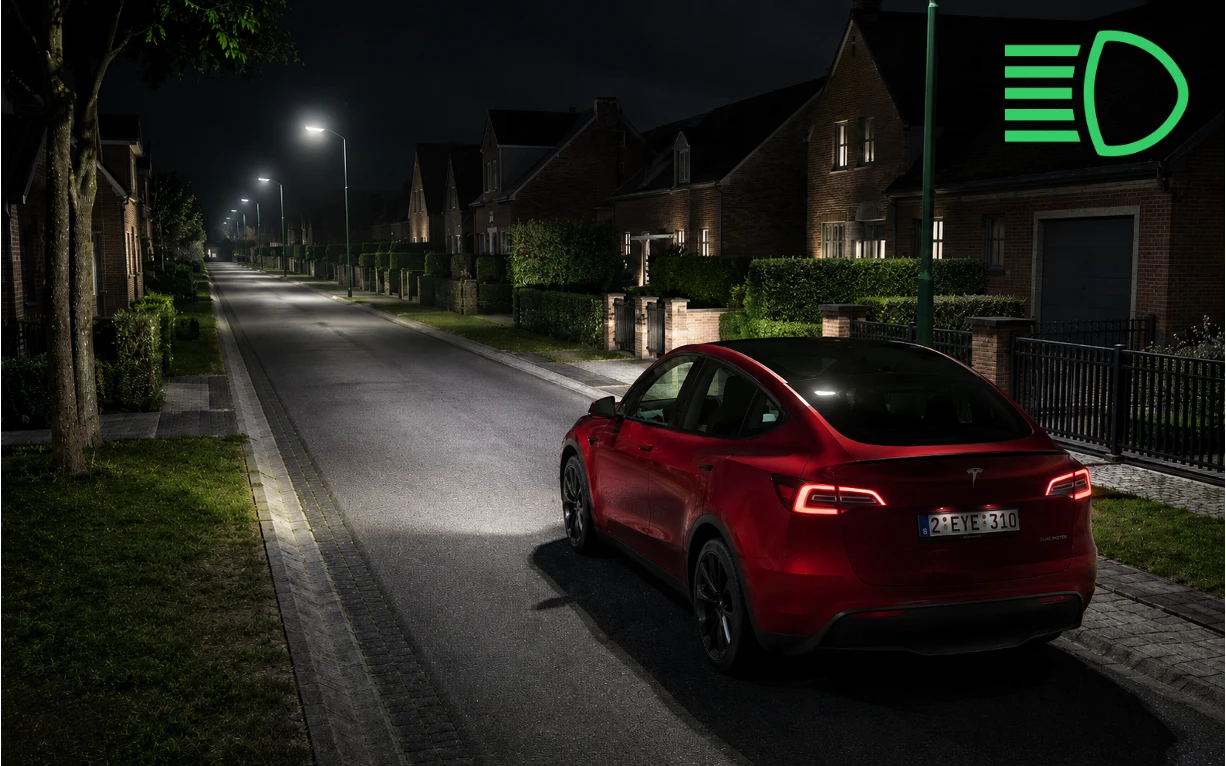
Read moreWhich light when? Dipped headlights under 200 m visibility, high beams only in the dark, and the rear fog light under 100 m.
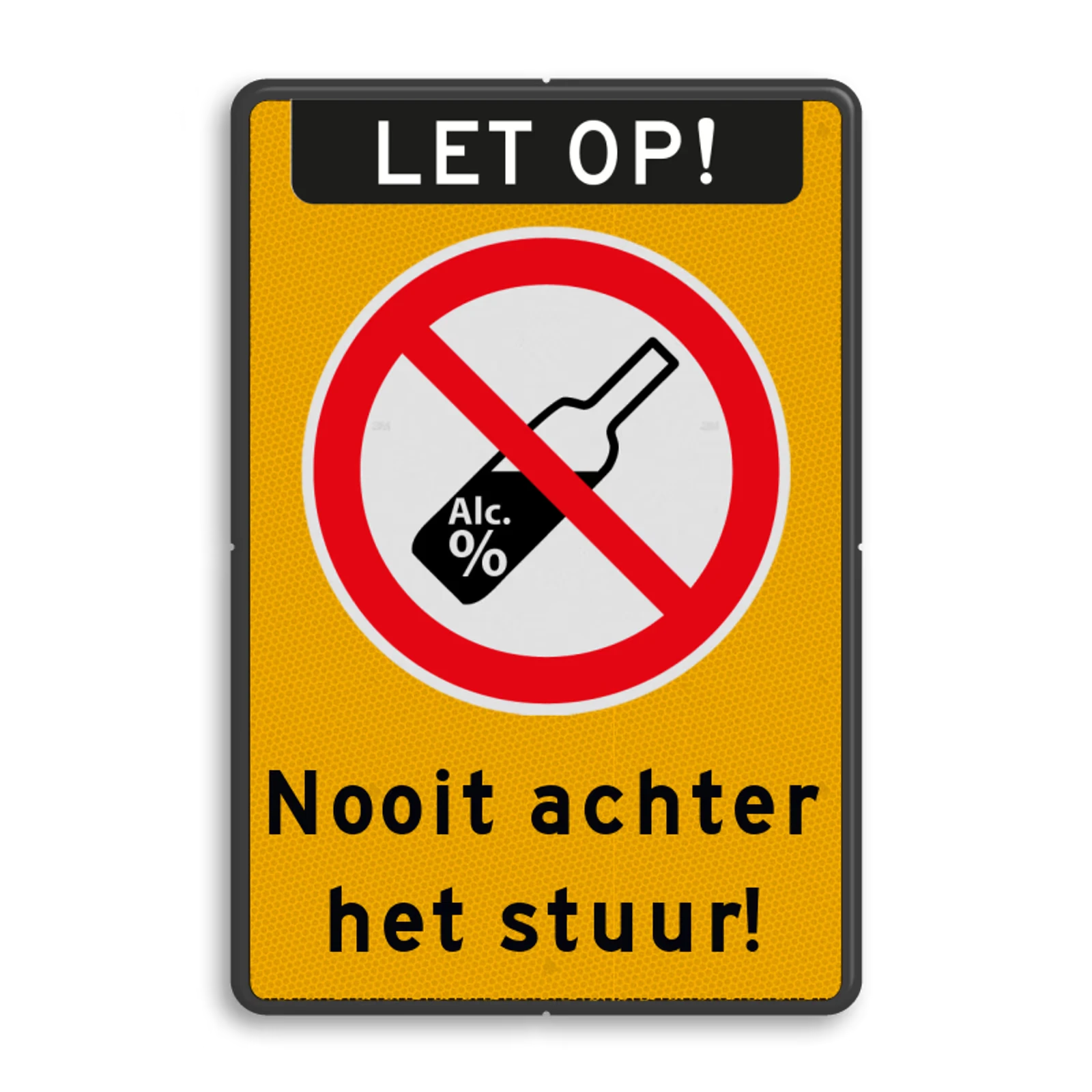
Read moreThe alcohol limit, zero tolerance for drugs, and the mobile phone rules, including the new driving ban of 12 hours since July 2026.
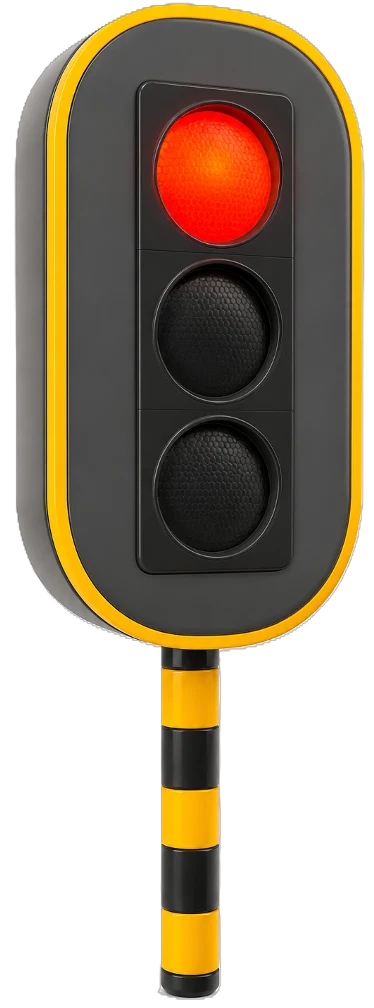
Read moreRed, orange, and green, flashing lights, and the three arm signals of the agent. Plus the fixed hierarchy at an intersection.
Read moreContinuous and broken lines, pre-sorting arrows, shark teeth, and the chequered marking, clearly explained.
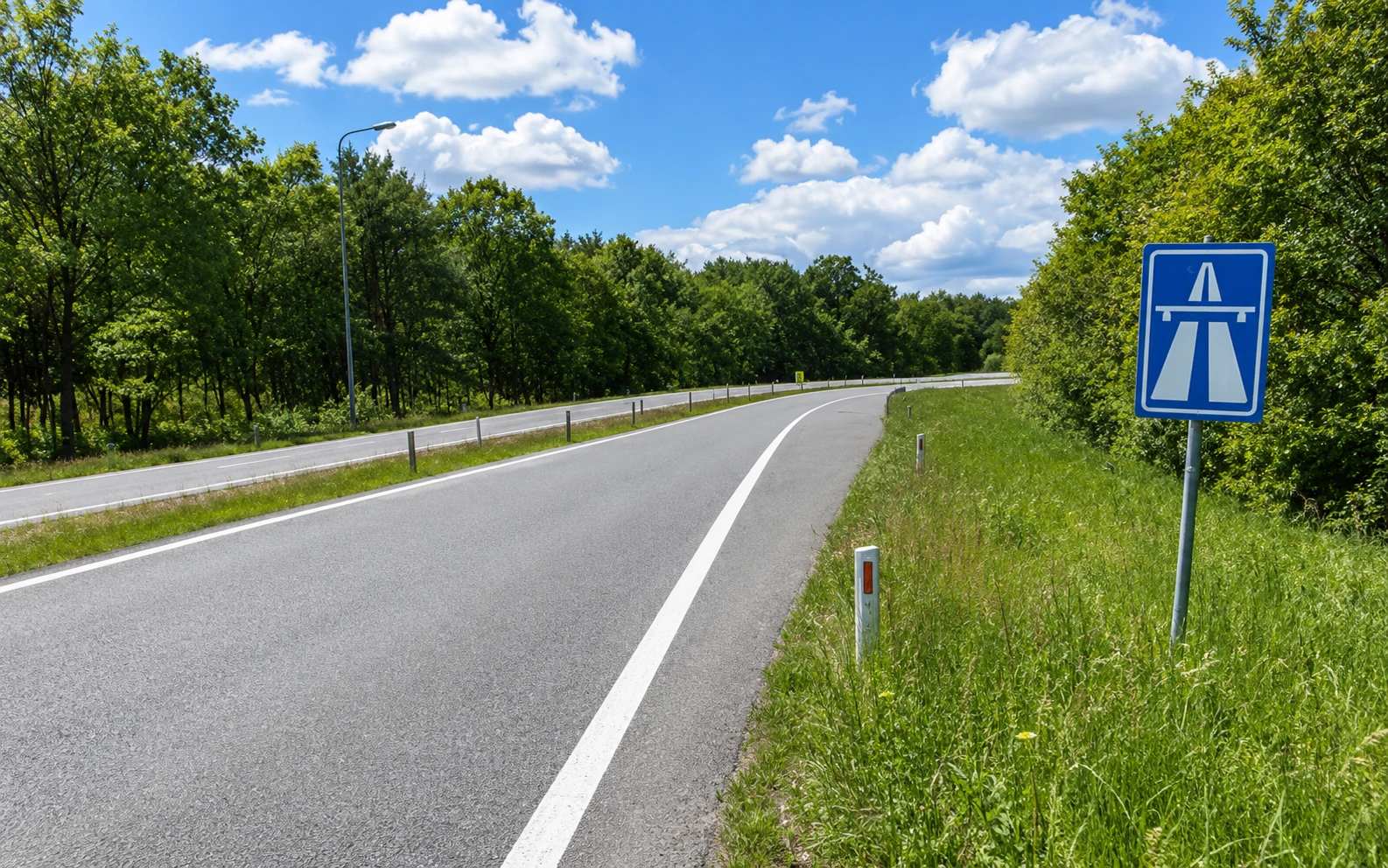
Read moreThe minimum and maximum speed, absolute prohibitions such as driving against traffic, and what to do in case of breakdown on the hard shoulder.
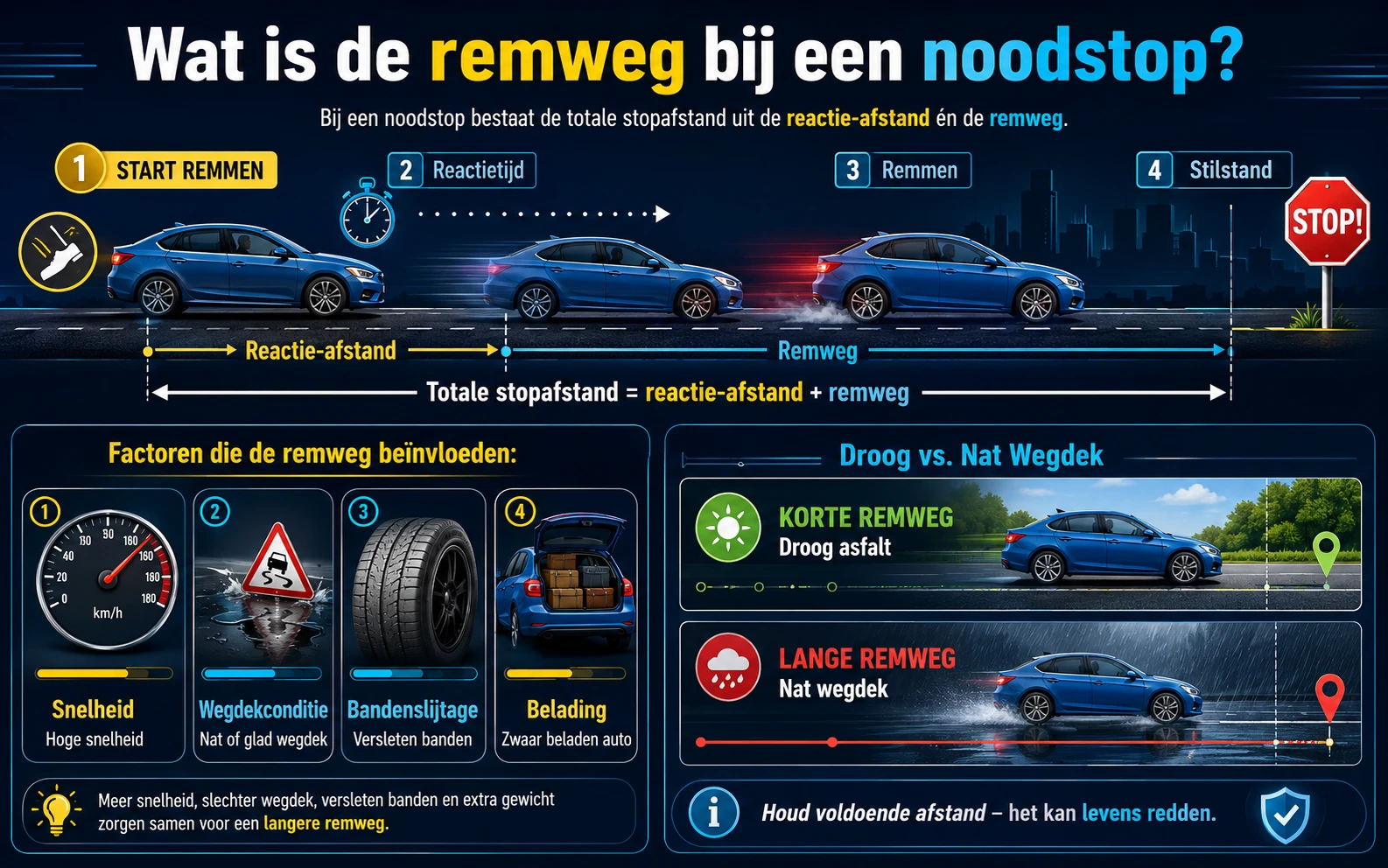
Read moreReaction distance plus braking distance, with the two formulas and a table for 50, 90, and 120 km/h on dry and wet road surfaces.
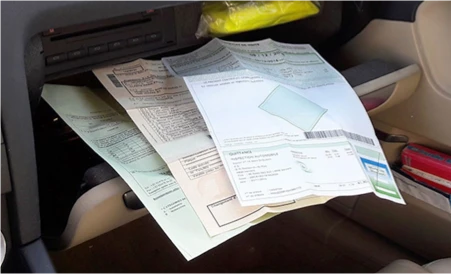
Read moreWhich documents are in your car, the tire tread depth of 1.6 mm, and how far your load may extend.
Read moreUp to 1.35 meters mandatory in a seat, the airbag rule in front, the exceptions in the back, and the certification marks R44/04 and i-Size.
Read moreTest your knowledge of the traffic rules with a free theory exam and immediately see your weak points.
Get free exam