

Belgian traffic signs are divided into six series, each with its own shape and color: danger signs (series A), priority signs (B), prohibition signs (C), obligation signs (D), stopping and parking signs (E), and indication signs (F). Additionally, zone signs apply to an entire area. Knowing these groups allows you to immediately understand what type of rule each sign imposes. If you want to practice them one by one, use the image bank with over 180 traffic signs.
How many traffic signs are there?
The road code classifies the signs into six series (A to F). In practice, the group of zone signs is added, which applies to an entire area. Our image bank contains over 180 signs, divided into these groups: danger signs (A), priority signs (B), prohibition signs (C), obligation signs (D), stopping and parking signs (E), indication signs (F), and zone signs.
For the theory exam for driving license B, you do not need to memorize every sign, but you will recognize them much faster if you understand the shape, color, and meaning by category. Practice each sign in the traffic sign image bank with over 180 signs.
Danger Signs (series A)
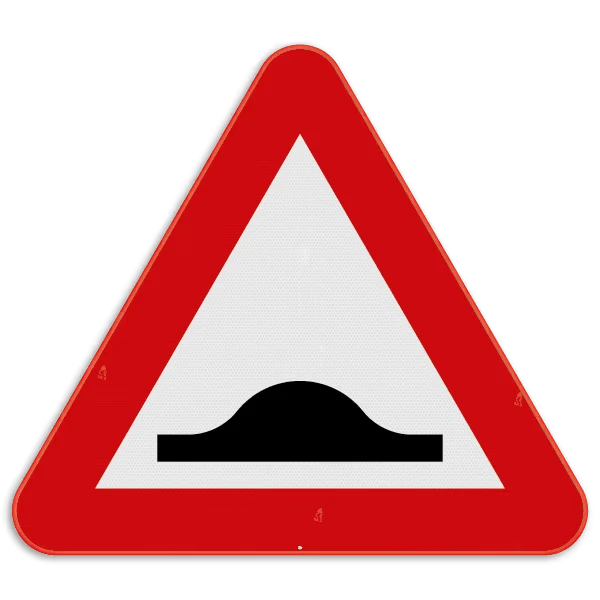
Danger signs are triangular, with a white background and a red border. They warn you of a danger ahead, allowing you to adjust your speed and driving behavior in time. They do not impose any obligations but call for extra caution. A danger sign is usually placed about 150 meters before the danger. The signs at a level crossing are the exception: they are placed right next to the crossing.

Priority Signs (series B)
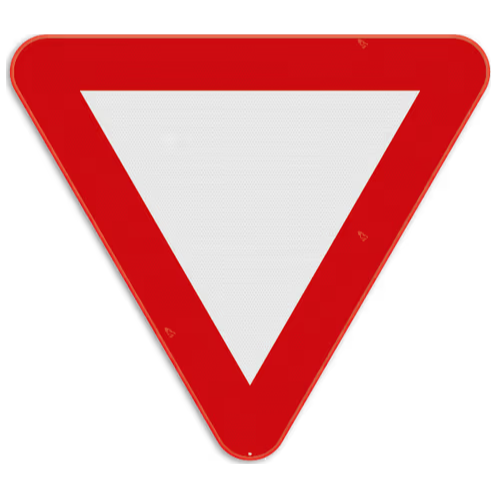
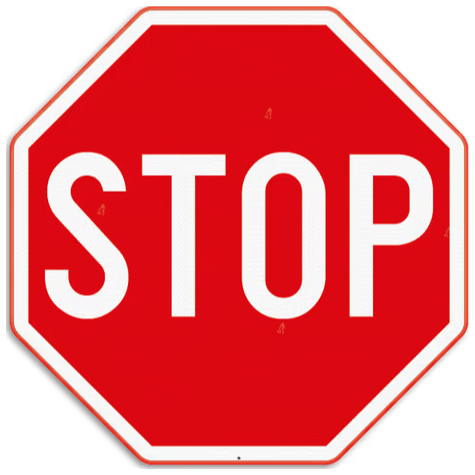
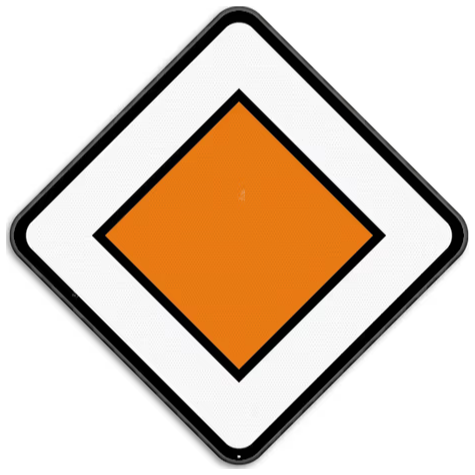
Priority signs regulate who goes first. This is the most feared category in the exam, as they do not have a fixed shape. The three you must know:
Prohibition Signs (series C)
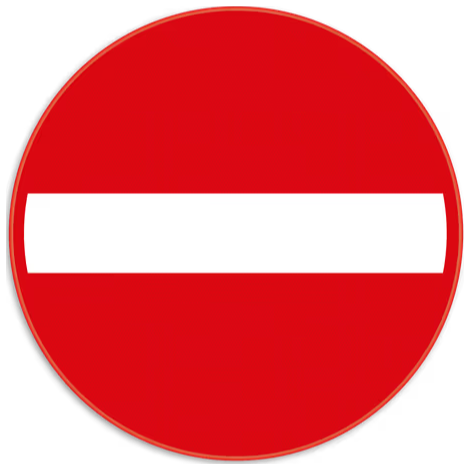
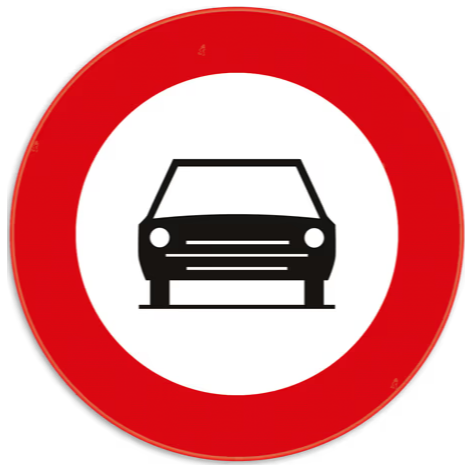
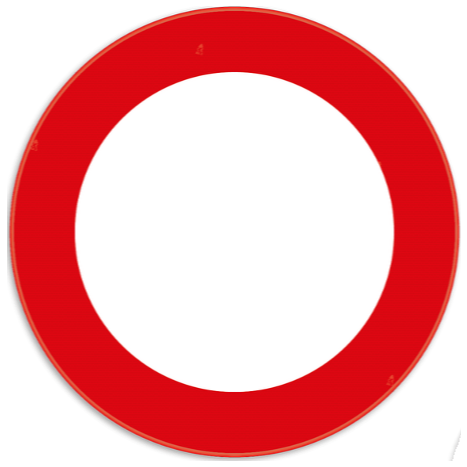
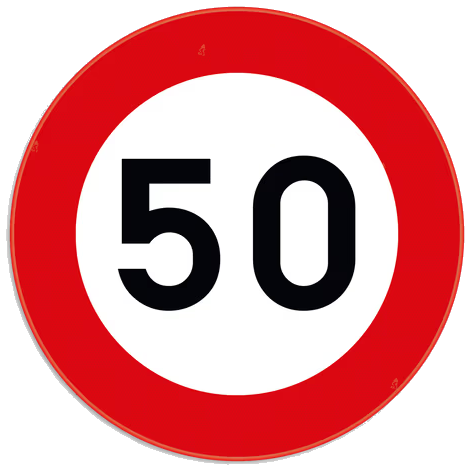
Prohibition signs are circular, with a white background and a red border. They indicate what is not allowed. The rule applies from the sign to the next intersection, unless otherwise indicated (for example, in a zone). Well-known examples are C3 (prohibited access in both directions), C35 (prohibited to overtake), and C43 (maximum speed).
Mandatory signs (series D)
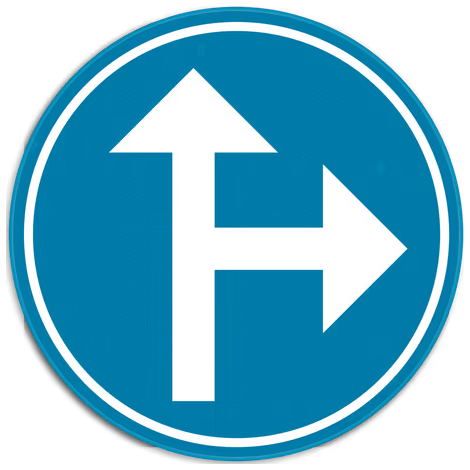
Mandatory signs are round and blue, with a white symbol. They impose an obligation: they indicate what you must do. Examples are D1 (mandatory driving direction, follow the arrow), D5 (roundabout, you follow the arrows around the traffic island) and D7 (mandatory bicycle path).

Stopping and parking signs (series E)
These signs regulate where you may stop and park. The two most important:
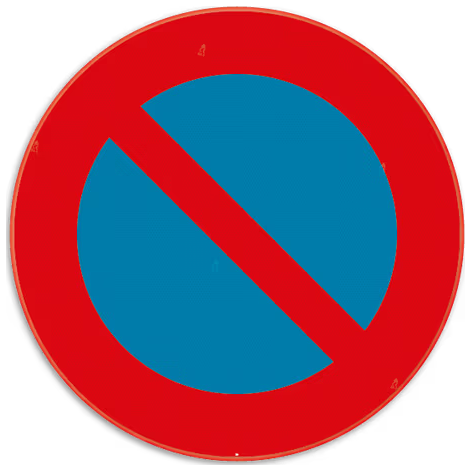
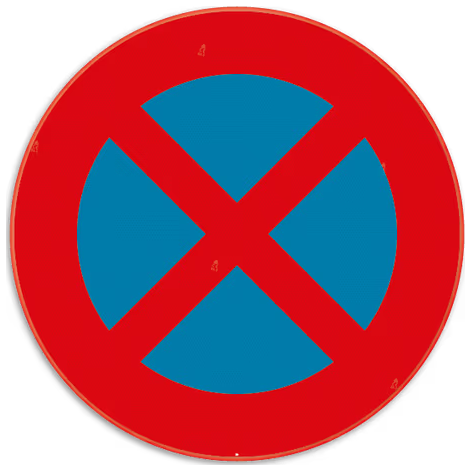
Sub-signs with arrows indicate where the zone begins, ends, or is repeated. You can read more about this in stopping and parking.
Indication signs (series F)
Indication signs provide information. They are usually rectangular or square and often blue, although they can also be another color. They do not prohibit or mandate anything, but indicate, for example, the start of the built-up area (F1), a zone 30 (F4a), a motorway (F5), a residential area (F12a), or a pedestrian crossing (F49).
Sub-signs and zones
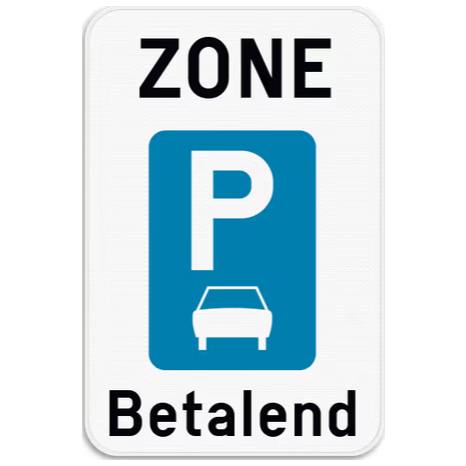
A sub-sign may hang under a sign that specifies the rule: a distance, a direction, or an exception for, for example, cyclists. Some signs apply to an entire zone (such as a zone 30): they apply until the corresponding end sign, not just until the next intersection.
Frequently asked questions
The road code classifies the signs into six series (A to F), along with the zone signs. Our image bank contains over 180 signs, each with code and meaning.
Six: danger signs, priority signs, prohibition signs, mandatory signs, stopping and parking signs, and indication signs.
A prohibition sign is round with a red border and indicates what is not allowed. A mandatory sign is round and blue and indicates what you must do.
Usually about 150 meters before the danger. At a level crossing, the sign is placed nearby.
In the free traffic signs image bank, you can view the signs by category and test yourself with a short quiz. Additionally, practice in complete theory exams.
Recognize all traffic signs flawlessly?
Learn the hundreds of signs by heart through our clear image bank and practice them in realistic exam questions until you recognize them immediately.
Choose your packageFurther reading: Stopping and parking · Priority rules · Overtaking in Belgium
Last updated: June 2026 · Content reviewed by Mathieu, instructor · Source: the Belgian road code