

Zip merging is mandatory in Belgium, but only in one specific situation: at a lane reduction and significantly delayed traffic. You drive up to just before the reduction and alternate merging from the two lanes, one by one, like the teeth of a zipper.
Anyone who merges too early or does not allow others to zip merge commits a first-degree offense (a fine of approximately 58 euros). Good news for those who are often annoyed by a "cut-in": they are usually doing it correctly.
When is zip merging mandatory?
Article 12bis of the road code states two conditions that must both apply simultaneously:
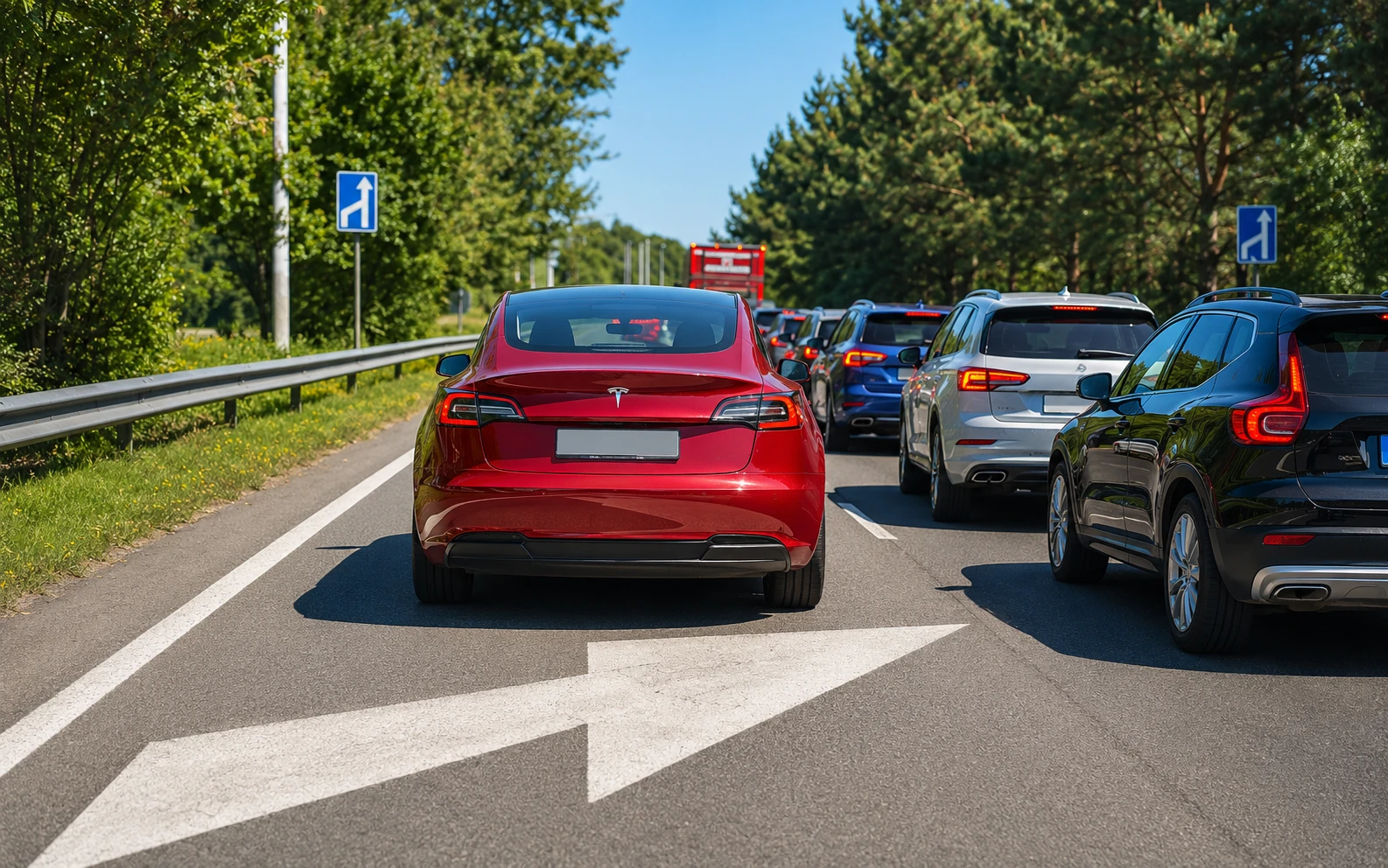
- A lane is closed due to roadworks, an accident, or a lane reduction.
- Traffic is significantly delayed (traffic jam or crawling speed).
If traffic is flowing smoothly? Then the zip merging rule does not apply. You simply merge in time and yield to those already on the other lane (a normal maneuver).
How do you zip merge correctly?
Zip merging goes smoothly as long as everyone follows the same three rules:
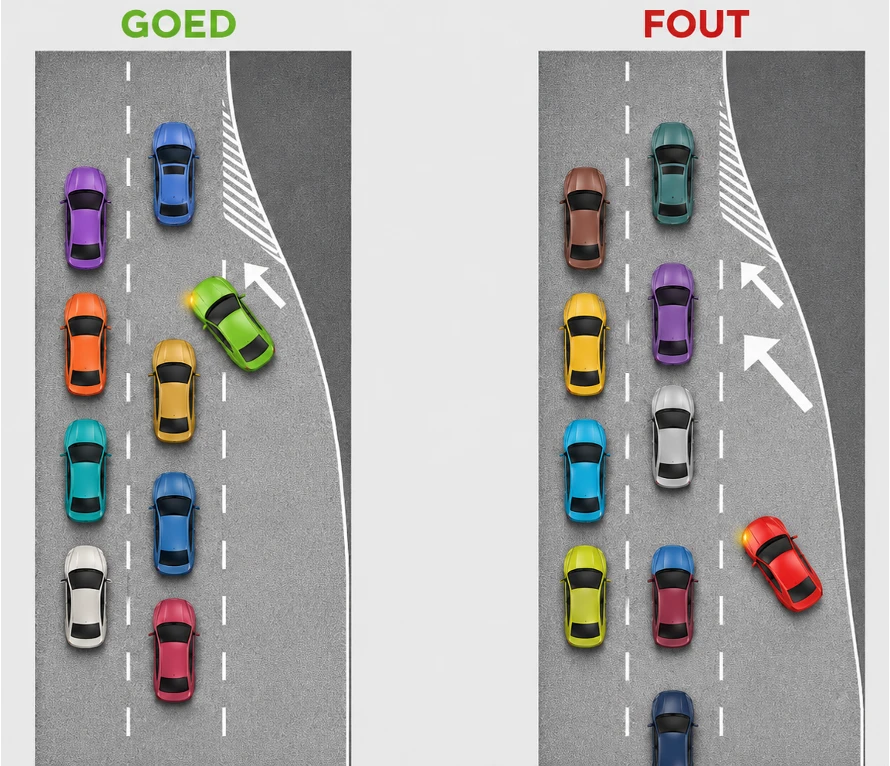
- Drive to the end. Stay in the closing lane until just before the reduction. Do not let yourself be rushed by drivers closing the gaps: you are following the law.
- Adjust your speed to the drivers in the lane next to you.
- One by one. Drivers in the continuing lane allow one vehicle to merge at a time: one from the continuing lane, one from the closing lane.
From 3 lanes to 1: the order
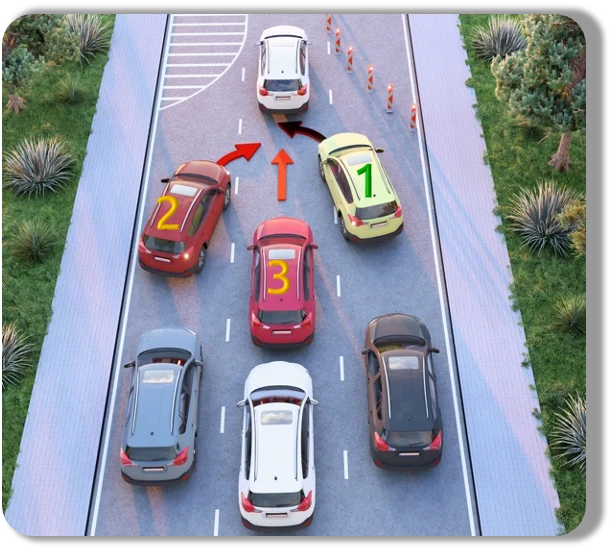
If both the left and right lanes are closed and only the middle one remains open, the driver in that middle lane lets two vehicles merge in a fixed order: first one from the right, then one from the left, and only then does he proceed himself.
The big pitfall: you do not zip merge on an on-ramp
This is the most common mistake on the exam. On the on-ramp of a highway, the zip merging obligation does not apply.
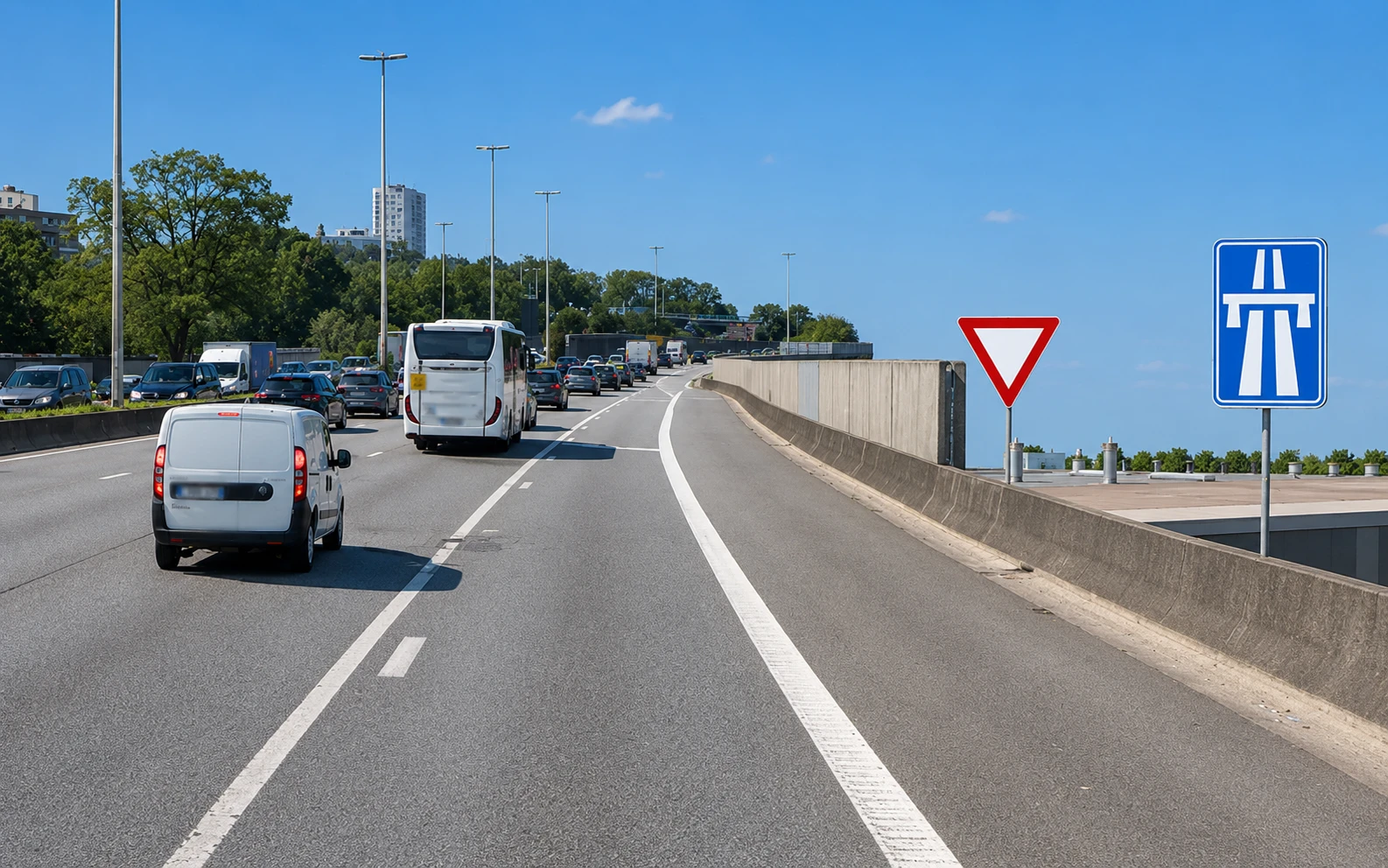
An on-ramp is not a closing lane, but an access road, and there is almost always a yield sign B1 (inverted triangle).
Your duty: yield to the traffic already on the highway and wait for a safe gap. That others often let you in is courtesy, not an obligation.
Frequently Asked Questions
Yes, in case of a road narrowing and significantly delayed traffic. Otherwise, it is not.
Up to just before the narrowing. Merging too early is incorrect.
No. There you yield to traffic on the motorway.
No longer confuse merging and joining?
These two are often confused in the exam. Practice the difference with realistic theory exams according to the official GOCA standards.
Choose your packageFurther reading: The emergency lane · Priority rules · Speed rules
Last updated: June 2026 · Content reviewed by Mathieu, instructor · Source: the Belgian Highway Code