

At a roundabout, traffic already on the roundabout has the right of way. Therefore, those entering the roundabout must yield. The most important thing to remember: you do not signal when entering, but you do use your right turn signal when exiting. You can recognize a roundabout by the D5 sign (blue arrows in a circle) with a B1 or B5 sign on the access roads.
Who has the right of way?
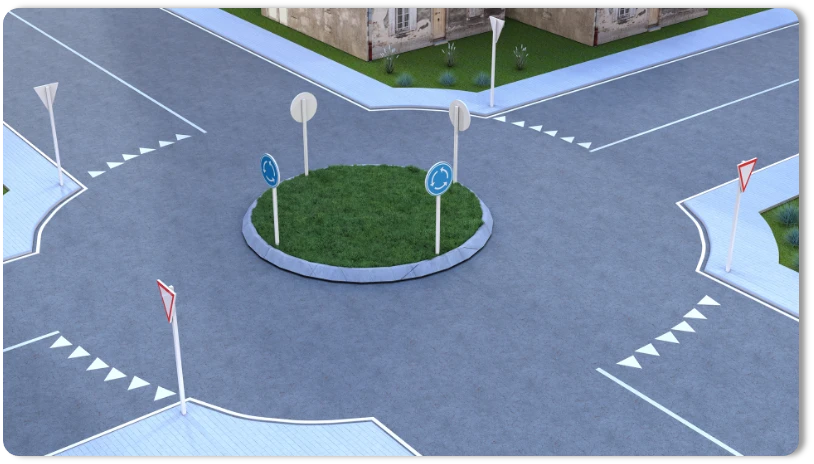
Traffic already on the roundabout has priority. Therefore, at the access roads, there is a B1 (yield) or, at some roundabouts, a B5 (stop). With a B5, you must always come to a complete stop before entering, even if the road seems clear. The right of way from the right does not apply here.
Signaling: the most important rule
This is the rule where most drivers go wrong:
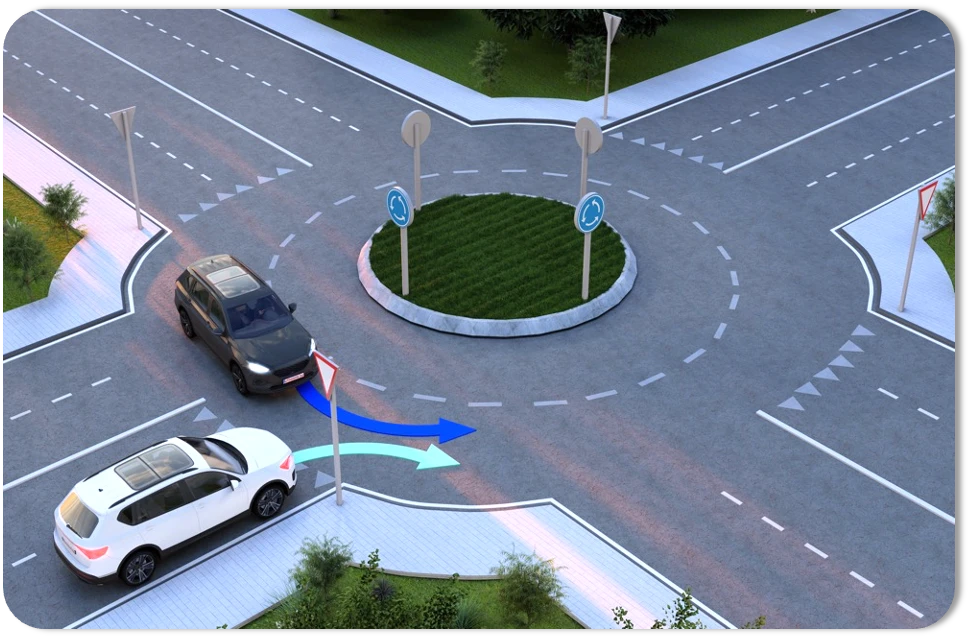
- When entering, you do not signal. You simply enter the roundabout, counterclockwise.
- When exiting, you turn on your right turn signal, timely before the exit you are taking. This way, others, including those wanting to enter, can see that you are leaving the roundabout.
Which lane do you choose?
At a roundabout with multiple lanes, you are not required to drive all the way to the right. You choose the lane that best fits your destination. However, you always exit the roundabout from the right lane. If you want to exit from the left lane, the driver to your right has priority. In that case, an extra round is often safer than forcing it.
Pedestrians and cyclists
When exiting the roundabout, you must yield to pedestrians at the crosswalk. If there is a bike path around the roundabout, pay extra attention: cyclists going straight through the roundabout have priority over those turning, unless priority is otherwise regulated with shark teeth and a B1.
Note: a roundabout is not a circular intersection
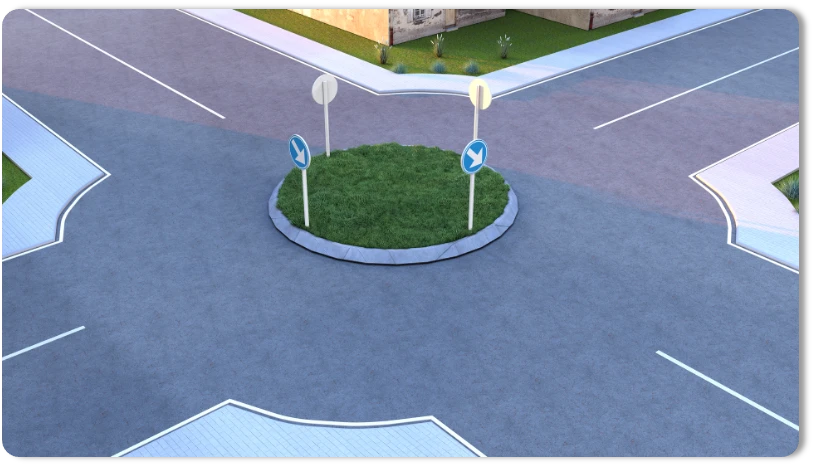
A roundabout (with the D5 and B1 signs) follows the special priority rule mentioned above. A circular intersection without those signs is something else: it is simply a round shape of an intersection. There, the regular right of way from the right applies, so you must yield to those coming from the right. They look similar, but the signs determine which rule applies.
Frequently Asked Questions
The traffic already on the roundabout. Those entering must yield.
Not when entering, but yes when exiting (to the right).
No, you choose the lane that fits your destination, but you exit the roundabout from the right lane.
Roundabout questions often recur
Practice them for free with a theory exam according to the official GOCA standards and immediately recognize the difference between a roundabout and a circular junction.
Choose your packageFurther reading: Right of way from the right · Priority rules · Traffic signs
Last updated: June 2026 · Content reviewed by Mathieu, instructor · Source: the Belgian Highway Code