

At an intersection without traffic signs, traffic lights, or an officer, the right of way from the right applies: you give way to any driver coming from the right. This applies even if you are driving straight ahead, and the width of the road does not matter.
When does the right of way from the right apply?
The rule applies at an intersection where there are no signs, lights, or an officer regulating the right of way. Two common misconceptions:
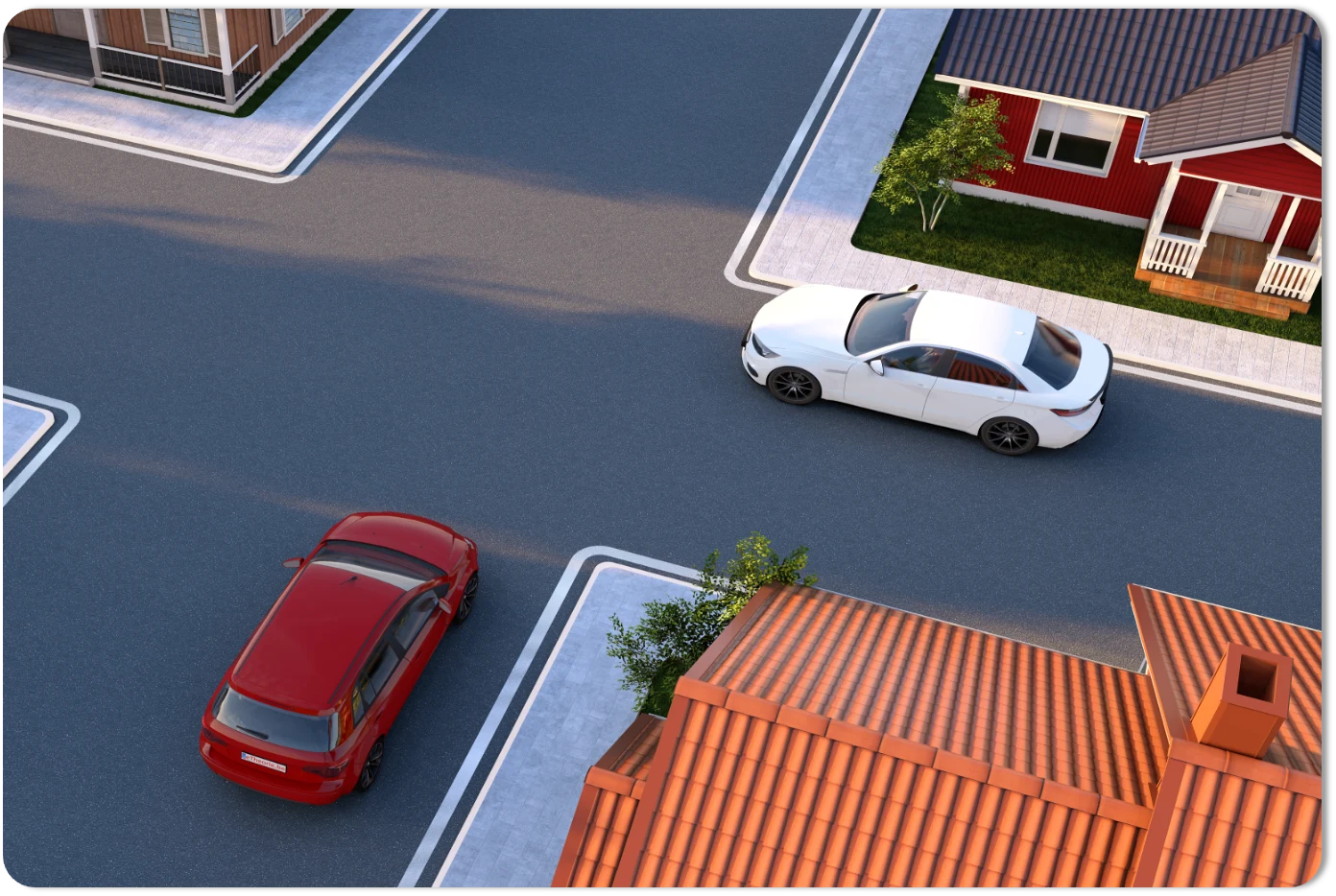
- Driving straight does not give right of way. Even those driving straight must give way to those coming from the right.
- The width of the road does not count. A wider or busier road does not give you right of way. Only signs, lights, and position (from the right) matter.
The Belgian detail: stopping retains the right of way
Since March 1, 2007, a driver coming from the right retains their right of way, even if they stop briefly and then resume. This is an important difference from the Netherlands, where you lose your right of way as soon as you stop. Therefore, in your exam, you should never assume that a stopped driver from the right has given up their right of way.
The hierarchy: what takes precedence over the right of way from the right?
From highest to lowest: a police officer, then traffic lights, then traffic signs (B1 give way, B5 stop, B9 priority road, B15 priority), and only then the right of way from the right. If one of those elements is present, it replaces the rule.
The exceptions
The right of way from the right does not apply in the following cases:
- At a roundabout: traffic on the roundabout has the right of way.
- From an unimproved road or path: those coming from an unpaved road onto a regular roadway must give way, even if they are coming from the right.
- From a private driveway, parking lot, or area: those departing from there do not have right of way.
- During a maneuver: those who are turning, reversing, or leaving from the side lose their right of way.
- From a forbidden direction: those coming from there do not have right of way.
- Entering a motorway: you must always give way to moving traffic when using the acceleration lane.
Common mistake: the sign B17
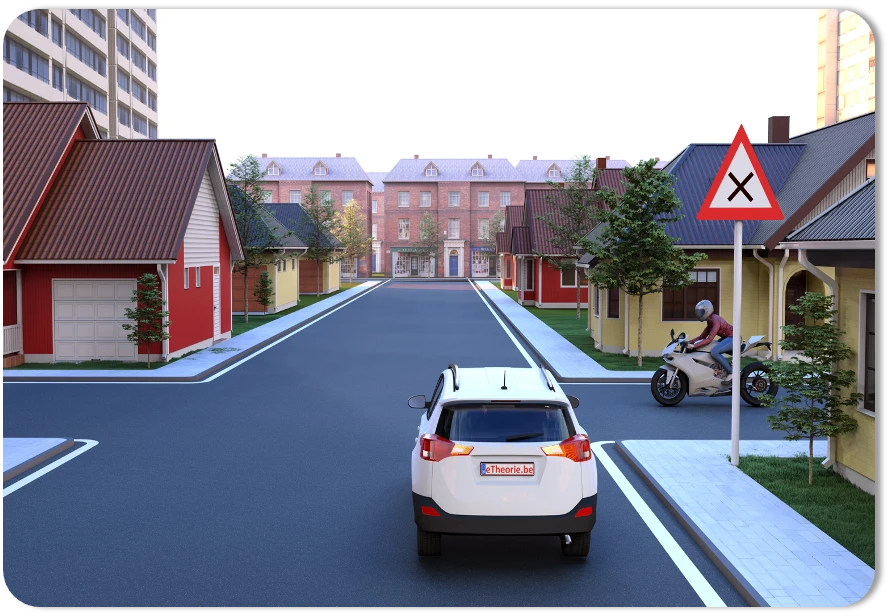
Sign B17 warns of an intersection where the right of way from the right applies. It is a reminder, not a change in the rule: the usual right of way from the right still applies.
Frequently Asked Questions
At an intersection without signs, lights, or an officer, you give way to those coming from the right.
Yes, driving straight does not give automatic right of way.
Yes, in Belgium, those coming from the right retain their right of way, even after a short stop.
Intersection questions are the most difficult
Practice them for free with a theory exam according to the official GOCA standards and see immediately where you still have doubts.
Choose your packageFurther reading: Roundabouts · Priority rules · Traffic signs
Last updated: June 2026 · Content reviewed by Mathieu, instructor · Source: the Belgian Highway Code